The Role of Storytelling in Children’s Festivals

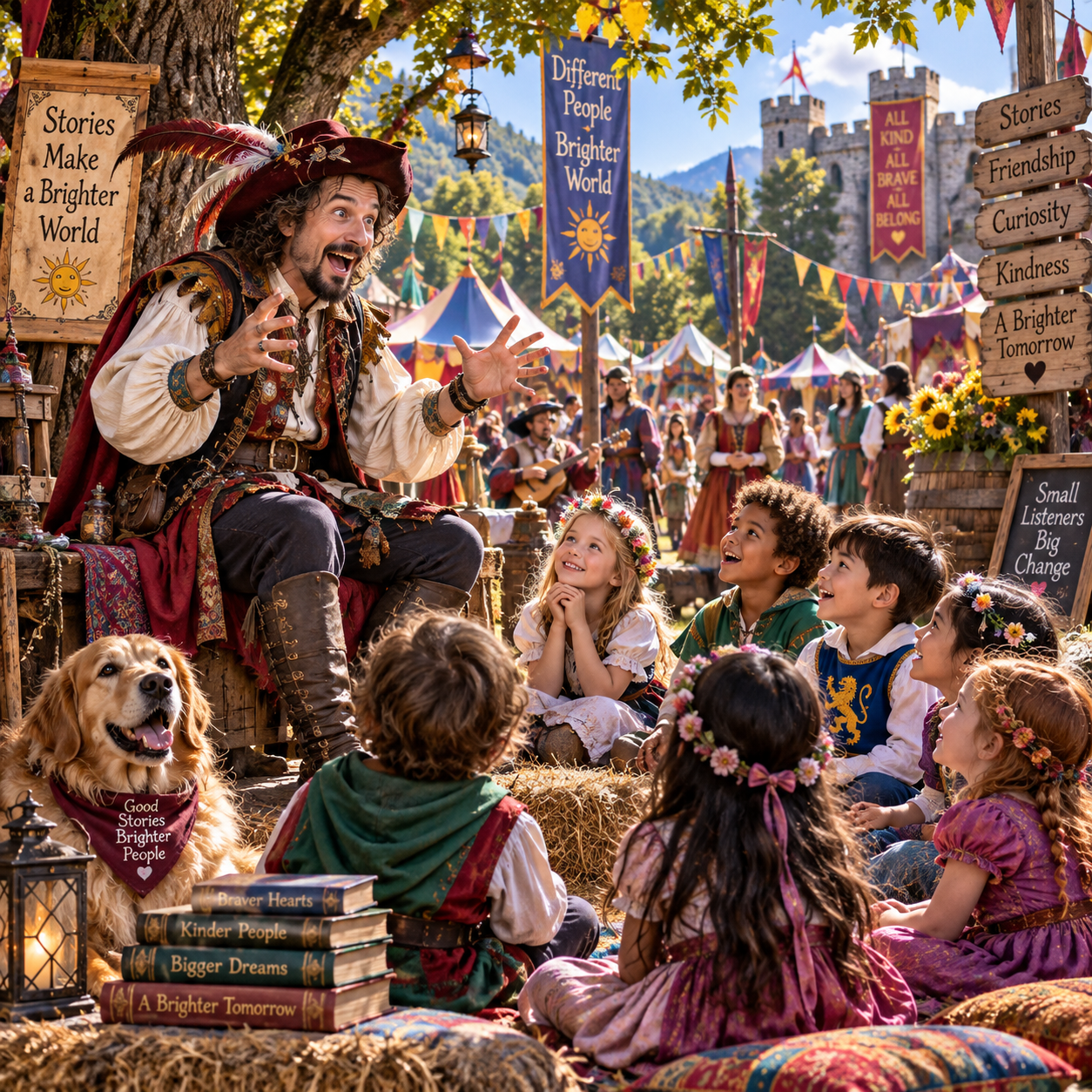
Storytelling gives a children’s festival a sense of wonder, direction, and shared purpose. A well-chosen story can connect live performances, creative workshops, games, and cultural traditions while inviting children to take part rather than simply watch.
Why Storytelling Belongs at Children’s Festivals
Storytelling belongs at children’s festivals because it creates a shared imaginative experience that helps children connect with people, places, and activities. Stories capture attention, give festival activities an emotional focus, and make the event easier to remember.
A festival can contain many exciting elements: music, crafts, food, puppets, rides, and performances. Without a connecting idea, these experiences may feel like separate stops. A central story can give them a common thread. Children might follow a young explorer searching for missing colors, help a forest character prepare for a celebration, or collect clues from different activity stations.
This approach turns movement around the venue into part of the adventure. A craft table becomes a place to make a character’s tool. A music area supplies the festival’s soundscape. A short live performance reveals the next part of the plot.
Storytelling also creates a welcoming social experience. When children laugh, predict what happens next, or repeat a phrase together, they participate in a temporary community. That shared response can help quieter children find a comfortable way into festival activities.
The strongest festival stories remain simple enough to follow but open enough to invite play. Organizers do not need a complicated script. A clear goal, a few memorable characters, and opportunities for children to influence events are often more effective than a long, polished production.
How Stories Support Children’s Learning and Development
Stories support children’s development by encouraging imagination, listening, communication, empathy, problem-solving, and confidence through playful participation. They complement formal education rather than replace it.
When children imagine a setting that is not physically present, they practice creative thinking. A storyteller may describe a cloud city, a hidden garden, or an underwater library, then ask children to decide what these places contain. There is no single correct answer, which gives children room to experiment.
Storytelling also strengthens active listening. Children must notice characters, changes, questions, and repeated details to understand what is happening. Interactive storytelling makes this skill physical: the audience may clap when a character appears, freeze when danger approaches, or listen for a sound that signals the next clue.
Characters provide a safe way to explore emotions and relationships. A story about a new child joining a group can open a gentle conversation about belonging. A character who makes a mistake and tries again can model persistence without turning the festival into a lesson.
Problem-solving appears naturally when the audience helps a character make a decision. Should the group cross the noisy bridge or take the longer woodland path? Which materials might repair a broken kite? These moments develop reasoning while keeping the emphasis on play.
Confidence grows when children contribute in manageable ways. Saying a repeated line, choosing between two options, leading a movement, or sharing an idea can all count as participation. Facilitators should never require a child to perform alone; children need the freedom to watch, join in, or step back.
For background on the value of play in healthy childhood development, organizers can consult guidance from the United Nations Children’s Fund.
Storytelling Formats for Different Festival Settings
The best storytelling format depends on the children’s ages, the venue, the group size, and the level of participation the festival wants to encourage. A varied programme allows children to encounter stories in more than one way.
Live narrators and read-aloud sessions
Live narrators work well in a shaded tent, small theatre, library corner, or quiet indoor room. They can adjust pace, volume, and questions in response to the audience. Read-aloud sessions suit younger children when they include expressive voices, large illustrations, songs, and brief movement breaks.
Puppet shows and theatrical performances
Puppet shows make characters visible and can help children follow a story from a distance. Short theatrical performances add energy to a main stage, although they should leave room for audience response. For preschool audiences, a 15- to 25-minute performance may be more practical than a full-length show.
Story walks and activity trails
A story walk places illustrated pages, signs, or narrated scenes along a route. Each stop can contain a small task, such as finding a symbol, making a sound, or answering a question. This format suits outdoor festivals because it spreads visitors across the venue and links storytelling with gentle exploration.
Workshops and participatory games
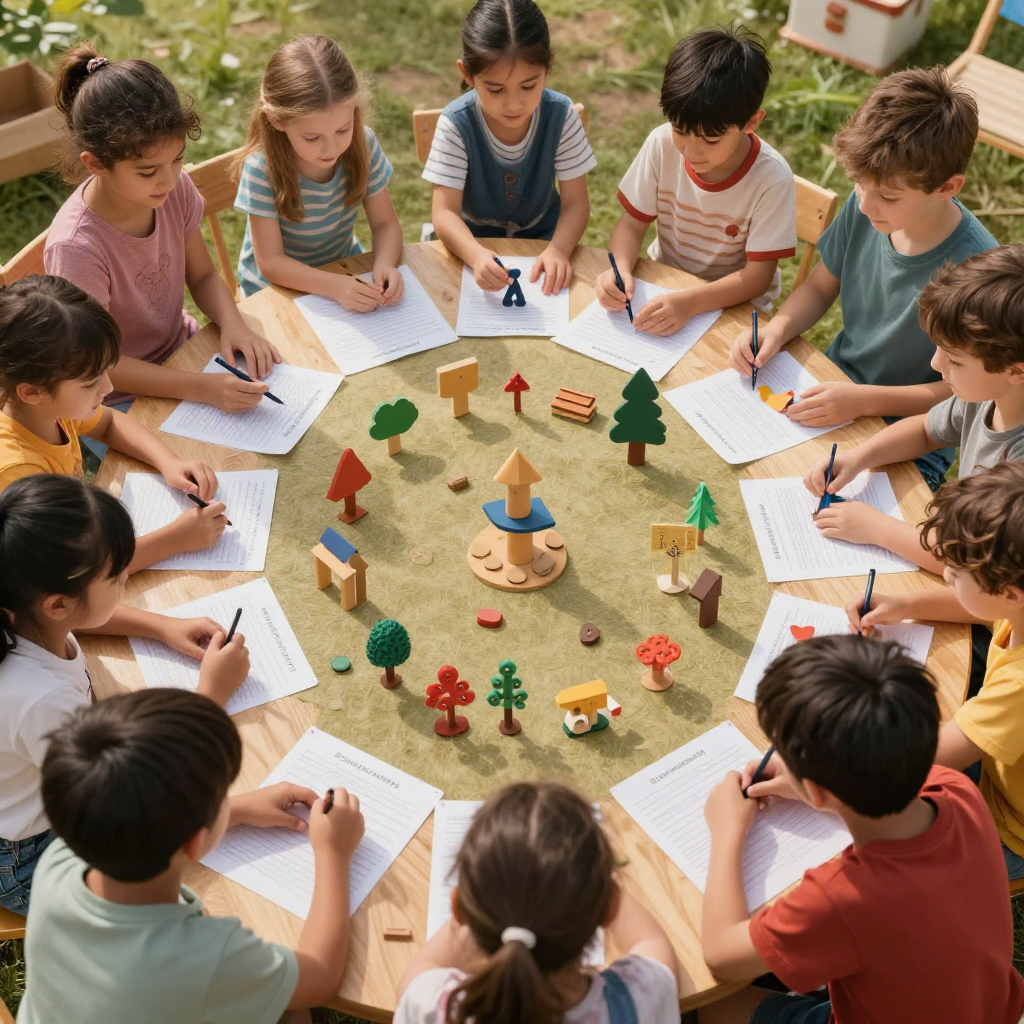
In a workshop, children can build a character, design a setting, create sound effects, or invent an alternative ending. Participatory games might ask children to move like story animals, match objects to characters, or work together to solve a fictional problem.
Choosing a format for its visual appeal alone can create problems. A loud stage show may overwhelm toddlers, while a quiet read-aloud may lose older children in an open field. **Audience size, sensory conditions, and age-appropriate programming** should guide the decision.
Making Festival Stories Interactive
To make storytelling interactive, give children frequent, low-pressure ways to influence the story with choices, movement, sounds, questions, and creative contributions. Participation should shape the experience without making the narrative difficult to manage.
- Offer meaningful choices: Let children decide whether a character follows the river or climbs the hill. Keep choices limited to two or three clear options.
- Use repeated phrases: A line such as “Together, we can find the way” gives the audience an easy part to remember.
- Add movement: Children might flap like birds, tiptoe past a sleeping giant, or make a circle to represent the moon.
- Invite sound effects: Hand drums, shakers, claps, and voices can create rain, footsteps, wind, or a train.
- Assign flexible roles: Children can become stars, raindrops, travelers, or helpers without needing costumes or individual lines.
- Build a shared story: Ask the group to name a place, choose a creature, and suggest one challenge. The storyteller connects the ideas into a short scene.
Questions work best when they are specific and answerable. Instead of asking, “What do you think?”, try, “Should the fox knock on the red door or the blue door?” This gives children a clear entry point and keeps the programme moving.
Interactive storytelling needs boundaries. Provide safe props, keep pathways clear, and avoid putting children on raised platforms unless the area is properly supervised. A facilitator can repeat instructions, notice children who need a quieter role, and help the storyteller transition between scenes.
Choosing Age-Appropriate and Inclusive Stories
Inclusive festival stories use language, pacing, characters, and participation methods that respect children’s different ages, abilities, backgrounds, and comfort levels. Representation should feel natural, while cultural stories and traditions require care and context.
For children aged two to four, choose short narratives with repetition, clear emotions, familiar actions, and strong visual cues. Children aged five to seven can usually follow a longer sequence with a simple problem and several characters. Older children may enjoy mysteries, moral choices, multiple viewpoints, or opportunities to write and perform parts of the story.
Accessibility begins with the setting. Offer seating with clear sightlines, quiet areas, and routes suitable for wheelchairs and mobility aids. Consider captioning, sign language interpretation, tactile materials, audio description, and visual schedules where appropriate. A microphone may help some children hear, but excessive volume can create a barrier for others.
Inclusive event planning also means avoiding assumptions about families. Stories can include different family structures, languages, bodies, neighborhoods, and ways of communicating. Children should see themselves represented without being asked to explain or speak for a whole community.
Cultural stories should come from credible sources and be presented respectfully. If a story belongs to a particular community, organizers should seek guidance, credit the tradition, and avoid turning sacred or sensitive material into a costume theme. Adaptations should preserve context rather than borrowing attractive details without meaning.
A useful review asks three questions: Who is visible? Who has agency? Who might feel excluded or stereotyped? The answers can improve both the story and the wider festival programme.
Building Storytelling into the Full Festival Programme
To build storytelling into the full festival programme, choose one flexible narrative theme and connect it to decorations, activities, performances, signs, and take-home materials. The story should enrich the event without forcing every activity into a rigid plot.
Start with a simple story map:
- Beginning: Introduce the festival world and its central question.
- Exploration: Invite children to visit stations, meet characters, or gather materials.
- Shared challenge: Bring the audience together for a game, performance, or problem.
- Celebration: Mark the conclusion with music, a group artwork, or a final story moment.
Suppose the central story follows a garden that has lost its sounds. A craft station can make paper insects, a music workshop can recreate bird calls, and a story walk can reveal clues beneath illustrated leaves. A closing performance brings every sound together. Children experience separate activities as parts of one imaginative journey.
Signage can use character names and short prompts, while volunteers can greet families in the language of the story world. Take-home postcards might include a drawing prompt or a question that encourages families to continue the story at home.
Keep the framework optional. Families who want to browse, eat, or attend only one performance should not feel lost. The narrative is a connecting layer, not a test they must complete.
Practical Tips for Organizers and Storytellers
Successful festival storytelling depends on careful preparation, flexible facilitation, comfortable spaces, and feedback gathered from children and families. The storytelling team should plan for real conditions rather than an imagined perfect audience.
- Rehearse with the actual props, microphone, route, and activity timings.
- Prepare a short version for late arrivals, tired groups, or weather delays.
- Keep interactive segments brief and alternate high-energy moments with quieter ones.
- Position performers where children can see faces, hands, puppets, and visual materials.
- Use clear transition signals so families know when a story activity is ending.
- Train volunteers to welcome participation without pressuring children to speak or perform.
- Check props for choking hazards, sharp edges, allergens, and trip risks.
- Gather feedback through simple questions, drawing cards, observation, or a short family survey.
One common mistake is overloading the story with information. Children may remember a character’s funny habit but lose track of a plot containing too many names and instructions. Another is confusing noise with engagement. A calm child listening closely is participating just as much as a child shouting an answer.
Outdoor festivals require additional planning for wind, sunlight, competing sounds, and changing crowd sizes. Use large visuals, portable shade, battery-powered audio equipment, and a clearly marked gathering point. Have an indoor or quieter alternative when weather or sensory conditions make the original format unsuitable.
When storytelling is treated as part of the festival’s design rather than an isolated stage slot, it can guide children through a richer experience. Stories give festival activities a reason to connect, while children’s choices give those stories life.
Frequently Asked Questions
What are the benefits of storytelling at children’s festivals?
Storytelling can strengthen attention, imagination, communication, empathy, confidence, and social connection while giving festival activities a memorable theme.
Which storytelling activities work best for young children?
Short read-alouds, puppet shows, repeated songs, movement games, sensory story walks, and simple prop-based activities work well for younger audiences.
How can storytelling be made interactive?
Invite audience choices, repeated phrases, movement, music, sound effects, character roles, questions, and collaborative ideas. Keep participation voluntary and easy to understand.
How do organizers choose inclusive stories?
Review language, representation, accessibility, cultural context, and character agency. Seek guidance when using cultural stories and avoid stereotypes or uncredited adaptations.
Can storytelling be adapted for outdoor festivals?
Yes. Story walks, roaming narrators, portable puppets, visual signs, and short performances suit outdoor spaces, provided organizers plan for sound, weather, visibility, access, and safety.