Safety First: Essential Protocols for Large-Scale Children's Events

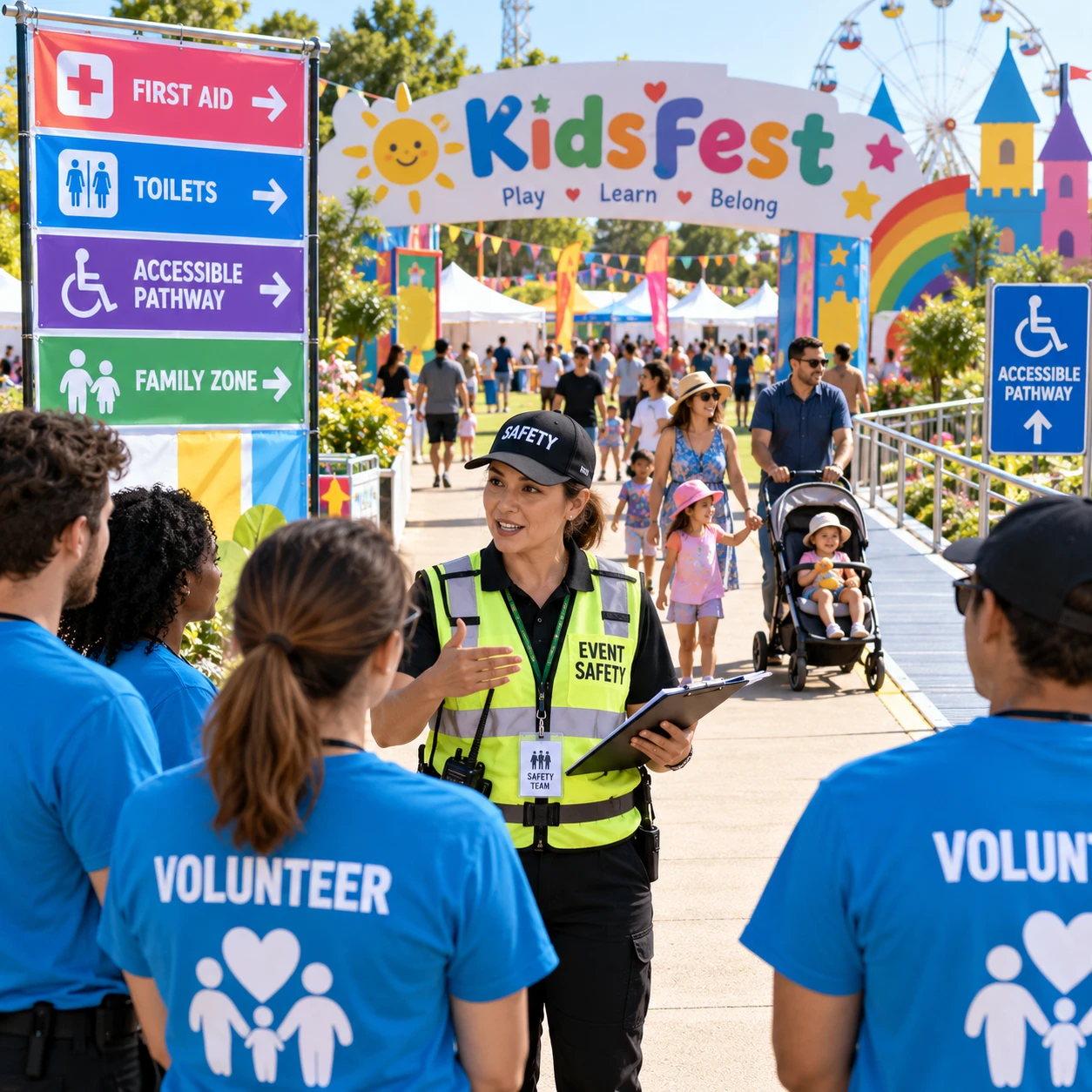
A large children’s festival needs more than a first-aid tent and a few volunteers at the gates. Strong safety protocols connect the venue, activities, crowd management, child safeguarding, and emergency response so everyone knows what to do before a problem occurs.
No plan can remove every risk. Organizers can, however, identify hazards early, assign clear responsibility, and make it easier for families and staff to act calmly. Use the steps below as a planning framework, then adapt them to the venue, children’s ages, local requirements, and advice from relevant professionals.
Start with a venue and event risk assessment
A risk assessment identifies what could cause harm, who might be affected, and how organizers will reduce the risk. Review the site, activities, expected attendance, staffing, and likely weather before finalizing the event plan.
Walk the venue with the venue manager and activity leads. Look for trip hazards, unsecured equipment, vehicle routes, water features, hot surfaces, blind corners, and places where children could leave the event unnoticed. Check how each activity changes the risk: a craft area may need safe tool handling, while a bouncy structure requires supervision, capacity controls, and suitable placement.
For each hazard, record the people exposed, existing controls, further action, and the person responsible. Give actions a deadline. A note such as “check generator cables” is less useful than “site lead will cover and inspect public-facing cables before gates open.” Revisit the assessment if attendance, layout, activities, or weather conditions change.
- Consider age and ability: toddlers, older children, and children with mobility or sensory needs may experience the same space differently.
- Check the whole operating period: include setup, public hours, closing, and breakdown, when vehicles or equipment may move.
- Coordinate early: confirm venue rules and local requirements, and consult emergency services or qualified safety advisers where appropriate.
Keep the assessment practical. A long document cannot replace a clear decision about who fixes a hazard and how staff will know the fix is complete.
Design the site for safe movement and supervision
A safe site layout separates conflicting activities, supports clear supervision, and gives families understandable routes in and out. Plan entrances, exits, accessible paths, activity zones, signs, and emergency access together rather than as separate details.
Map the flow from arrival to departure. Place check-in and information points where queues will not block exits or emergency routes. Keep delivery vehicles away from public areas during operating hours where possible, and use barriers or staff to control any necessary crossings. Make exits easy to find without making them look like ordinary activity entrances.
Position high-interest attractions so queues do not spill into walkways. Mark queue starts and waiting areas, and decide who can pause an activity if the space becomes too crowded. Leave accessible routes clear and check that families can reach toilets, quiet areas, first aid, and key attractions without navigating steps or narrow bottlenecks.
Use simple, consistent signs for entrances, exits, toilets, first aid, information, and lost-child reporting. Staff should be able to describe locations using the same names shown on signs and maps. A site map with numbered zones can help responders communicate precise locations over the radio.
There is a trade-off between compact layouts, which can make supervision easier, and open layouts, which may spread visitors out but create longer response distances. Test the plan with a site walk-through and consider where sightlines disappear when stalls, tents, queues, and decorations are in place.
Set clear child-safeguarding and lost-child procedures
Child-safeguarding procedures set clear boundaries for supervision, reporting concerns, and responding when a child is separated from their caregiver. A lost-child procedure should protect the child’s privacy while enabling a calm, prompt reunion.
Tell families in advance whether children must remain with a responsible adult and whether the event offers any supervised activities. Do not imply that general event staff provide childcare. For activities with dedicated supervision, document who is responsible, how children enter and leave, and what the adult-to-child arrangements are under applicable rules and the activity’s risk assessment.
Choose a staffed, visible reunification point away from vehicle routes and busy queues. When a child is reported missing, alert the designated lead immediately, share a factual description and last known location through the agreed channel, and follow the site’s search and escalation plan. Do not broadcast a child’s full name or sensitive details over a public-address system. Keep the child with an authorized staff member in the agreed safe area, and verify the caregiver’s relationship using the procedure established with the venue and safeguarding lead.
Use privacy-conscious identification practices. A wristband can show a caregiver’s contact number without displaying a child’s name publicly; explain that participation is optional and how the information will be handled. Avoid collecting more personal data than the event needs, and set a clear limit on who can access it and how long it is retained.
- Record the time, location, actions taken, and reunification outcome according to the event’s incident process.
- Escalate suspected harm, unsafe collection, or safeguarding concerns to the designated lead and relevant authorities under local procedures.
- Never ask a child to search for their caregiver alone or send them across the site unaccompanied.
Prepare staff, volunteers, and vendors
Staff, volunteers, and vendors need clear roles, reliable communication, and a shared understanding of when to escalate a concern. Brief everyone before opening, including people who work only at one activity or stall.
Name leads for operations, crowd management, safeguarding, first aid, communications, and emergency coordination. Each role needs a backup. Give staff a short written brief with the site map, radio channel or contact method, reporting point, emergency signals, and the name of the person they report to. Explain what they can decide themselves, such as pausing their activity, and what requires approval.
Run a practical briefing rather than relying on a document alone. Walk through a lost-child report, a blocked exit, a medical call, and a sudden weather change. Ask staff to repeat the reporting route in their own words. Provide vendors with the rules that affect their work, including vehicle access, cables, heat sources, waste, and how to summon help.
Check that radios or phones work across the site and agree on plain-language location names. Avoid codes that new volunteers may not remember. If communication fails, everyone should know the fallback method, such as sending a runner to a named control point.
Training cannot make every person an emergency specialist. It should help each person recognize a concern, take the actions within their role, and pass accurate information to the right lead.
Plan for medical needs and emergencies
An emergency action plan explains how the event will respond to injury, illness, fire, evacuation, severe weather, and other credible emergencies. It should identify decision-makers, communication methods, emergency access routes, and the process for recording incidents.
Arrange first-aid and medical support in proportion to the event’s activities, site, and expected needs, using qualified providers where required. Mark the first-aid point on signs and maps, and tell staff how to contact the medical team. Keep emergency vehicle routes and access points clear throughout the event. Confirm who will meet responders and guide them to the incident.
Write down who can initiate an evacuation or pause activities, how staff will alert visitors, and where people should go. Consider how to assist children and visitors who may need extra support, and how to account for staff and activity groups without creating a new crowding point. Coordinate the plan with the venue and relevant emergency services as appropriate.
Weather preparedness needs specific triggers and actions. Monitor forecasts and conditions, identify shaded or sheltered areas, and decide in advance when to stop an activity, move people, or close the event. Wind can affect temporary structures; heat can increase the need for shade and drinking water; lightning or other severe conditions may require people to leave exposed areas. Follow venue guidance and local emergency advice rather than relying on a single generic rule.
After any incident, prioritize immediate care, preserve accurate facts, and complete the event’s incident report. Record what happened, when, where, who was notified, and what follow-up is needed. Review near misses too; they can reveal a hazard before someone is hurt.
Keep families informed before and during the event
Families need clear, consistent safety information before arrival and easy-to-find updates on site. Explain supervision expectations, reporting points, accessibility arrangements, and how to receive urgent announcements.
Before the event, share practical details: entrances, accessible routes, transport or drop-off guidance, first-aid and information locations, weather advice, and whether activities require an accompanying adult. Explain how caregivers can report a missing child or raise a safeguarding concern. Use plain language and make key details available in formats families can access.
At the venue, repeat essential information on signs, maps, and staff briefings. Identify a recognizable information point and make sure staff can direct visitors there. If conditions change, give short, specific instructions through the available channels, such as public-address announcements, event messages, or staff at key points. Avoid vague warnings; tell families what has changed, what action to take, and where to go.
Families can help by agreeing on a meeting point, keeping a current contact number available, and discussing what their child should do if separated. These measures support the event’s lost-child procedure; they do not replace staff responsibility for responding safely.
Frequently asked questions
What should a children’s event emergency plan include?
It should name decision-makers and backups, list emergency contacts, define how staff communicate, show access and evacuation routes, and explain responses to medical incidents, fire, severe weather, and other identified risks. Include roles for contacting responders, guiding them to the incident, assisting visitors who need support, and documenting what happened. Coordinate the plan with the venue and adapt it to local requirements.
How should organizers handle a lost child?
Use a designated safeguarding lead and staffed reunification point. Take the report promptly, share only necessary details through the agreed staff channel, follow the site search and escalation procedure, and keep the child accompanied in the designated safe area. Verify a caregiver’s identity according to the event’s procedure before reunification, then record the incident. Avoid public announcements that expose private details.
What safety information should families receive before arrival?
Share supervision expectations, entry and exit information, accessible routes, first-aid and information locations, weather guidance, emergency updates channels, and how to report a lost child or safeguarding concern. Tell families about any activity-specific age, access, or caregiver requirements in clear language.
How can staff manage crowded activity areas?
Set a visible queue, keep walkways and exits clear, and assign a staff member to monitor the area. Agree on a simple action for rising crowd pressure, such as pausing entry or the activity while the lead checks conditions. Reposition barriers or staff if queues block circulation, and resume only when the area can be managed safely.
Large children’s events run more safely when prevention, communication, and ownership work together. Review the risk assessment, rehearse the response, and make sure every person on site knows where to report a concern. Those habits give families and staff a clearer path to act when plans meet real conditions.