Innovative Activity Stations for Modern Kids’ Events

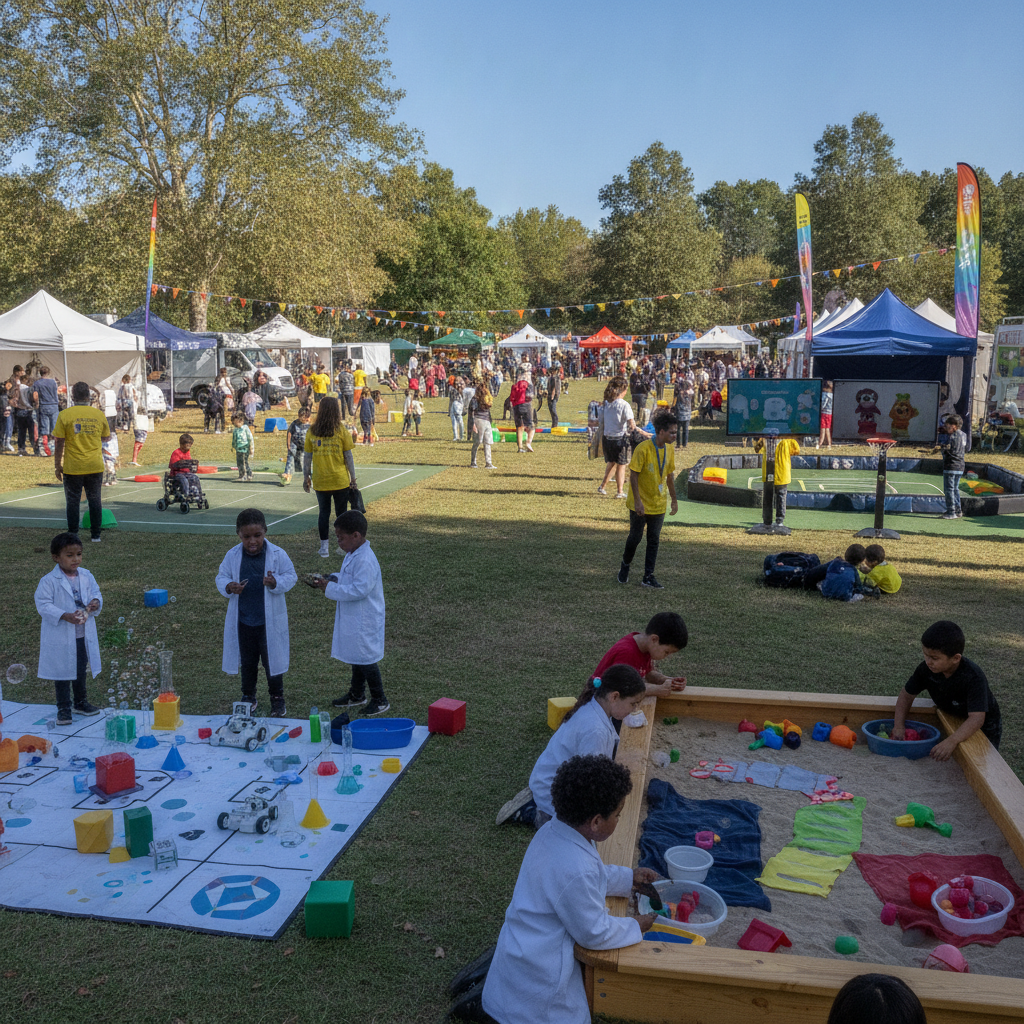
Modern children’s events work best when every child can find something engaging to do. Activity stations create that variety by dividing a festival into hands-on spaces for making, moving, discovering, imagining, and taking a break.
Unlike a single stage performance, stations let children choose their own pace. A younger child might explore a sensory table while an older child tackles a construction challenge, then both can meet at a collaborative art wall. The result is a more flexible children’s festival with less waiting and more meaningful participation.
Why Activity Stations Work for Modern Children’s Events
Activity stations work because they give children choice, reduce queues, and support different interests, ages, energy levels, and abilities. A well-planned layout turns a large festival into several manageable experiences that children can explore throughout the day.
Multiple stations also improve event flow. While one area is busy, families can move to another without feeling that they have missed the main attraction. Short, repeatable activities suit children with varied attention spans, while open-ended formats allow enthusiastic participants to stay longer.
- Choice: Children can select creative, active, social, educational, or calming experiences.
- Less waiting: Several stations spread attendance across the venue.
- Natural interaction: Cooperative tasks encourage children to communicate and solve problems together.
- Flexible participation: Activities can offer seated, standing, independent, and group options.
- Visible progress: Finished crafts, completed challenges, and shared artwork give children a sense of achievement.
The strongest activity stations have a simple entry point, a clear goal, and optional extra challenges. That structure welcomes beginners without boring children who want more complexity.
Creative and Imaginative Activity Stations
Creative activity stations invite children to make, perform, invent, and tell stories using accessible materials and open-ended prompts. They suit indoor and outdoor festivals because most can be scaled from a small table to a large workshop zone.
Collaborative art and craft stations
A collaborative art wall can become the visual centerpiece of a children’s festival. Provide large paper panels, washable markers, paint sticks, collage shapes, and simple prompts such as “design a future city” or “create an underwater world.” Use low tables or vertical surfaces at different heights so more children can participate comfortably.
A craft lab might offer rotating projects: paper engineering, friendship bands, recycled-material sculptures, or decorate-your-own festival flags. Pre-sort supplies into trays, and keep one finished example nearby. This reduces explanation time and helps children begin independently.
Role-play and storytelling
Costume and role-play areas can include capes, fabric, hats, puppets, and themed props. Children might become explorers, community helpers, inventors, or characters in an imaginary town. Avoid requiring performance; children can dress up, build a scene, or play quietly.
A storytelling corner works well with a rug, cushions, picture cards, and a facilitator who offers short stories or invites children to create their own endings. Pairing storytelling with puppet-making gives children a clear sequence: make, imagine, share.
Build-your-own creations
Construction stations using cardboard tubes, foam blocks, magnetic tiles, large interlocking pieces, or recycled boxes support imagination and teamwork. Add challenge cards for children who need direction: build a bridge, make a shelter, or design a vehicle that can carry a toy.
Choose materials according to age. Avoid small loose parts with toddlers, and inspect reusable pieces before the event. The creative goal matters more than producing identical finished objects.
STEM, Discovery, and Technology-Inspired Stations
STEM activities turn curiosity into hands-on discovery through building, testing, observing, coding, and problem-solving. Digital technology can enrich these experiences, but screen-free challenges often provide equally strong engagement and are easier to supervise.
Hands-on science and engineering
Offer simple investigations with visible results. Children can test which paper shapes hold the most blocks, build a protective capsule for a soft toy, create a marble run, or explore floating and sinking with large objects. Ask them to predict, test, and change one feature rather than focusing on a correct answer.
For a construction challenge, provide a limited supply of craft sticks, connectors, cups, or cardboard. A five-minute build round keeps the queue moving, while an optional second round lets children improve their design.
Coding-style games
Unplugged coding games introduce sequencing and logic without computers. Children can give a partner direction cards to reach a target, arrange arrows to guide a toy robot, or identify and fix a mistaken instruction. Use floor grids, picture symbols, and large cards for easy reading.
For older children, a supervised tablet station could use an age-appropriate creative coding tool or interactive simulation. Limit device numbers, clean shared equipment between users, and provide a parallel non-screen activity so technology remains an option rather than a requirement.
Interactive play should remain purposeful. A screen that merely occupies children may create queues and disengagement; a digital station that asks them to design, sequence, or solve gives the technology a clear role.
Active, Outdoor, and Adventure Stations
Active stations provide structured movement through obstacle courses, target games, relays, dance, balance tasks, and low-risk adventure play. They help children use energy while giving organizers control over routes, equipment, and supervision.
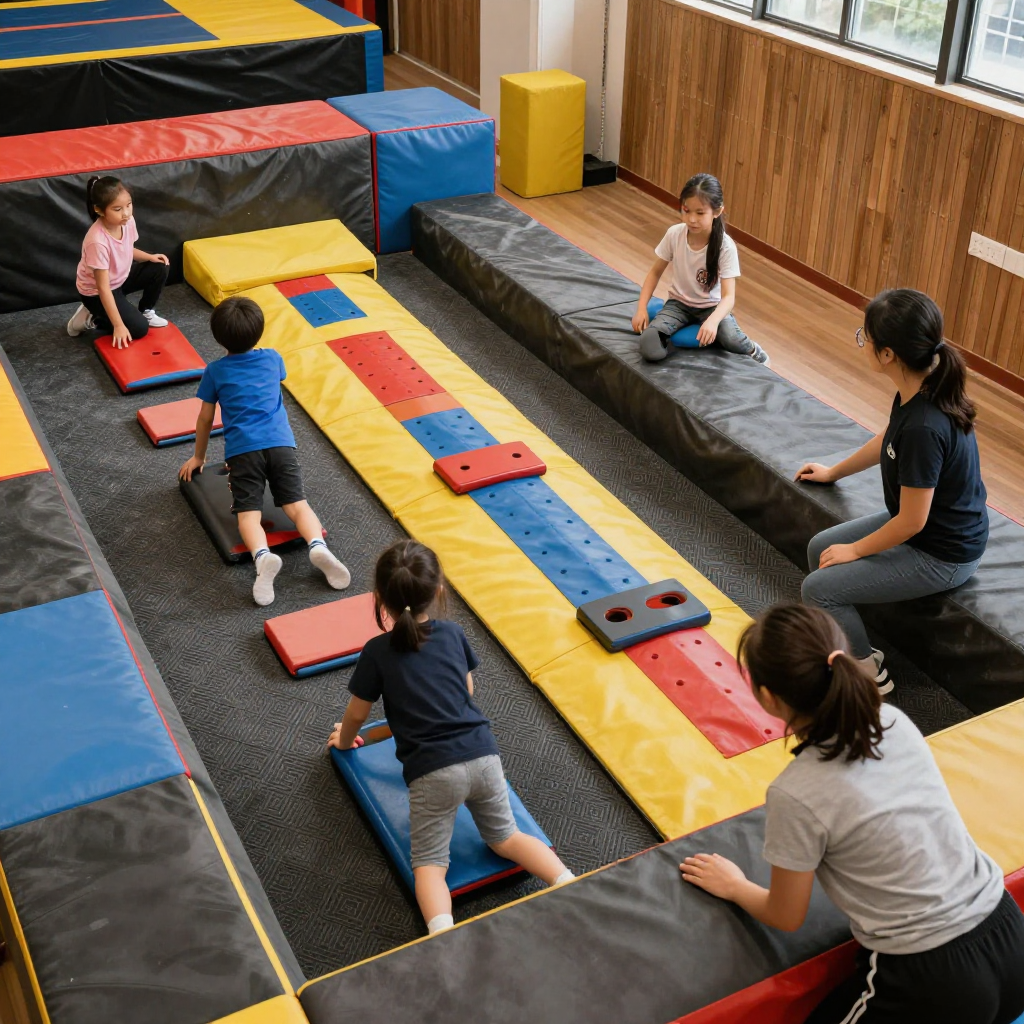
An obstacle course can combine cones, floor markers, hoops, tunnels, stepping pads, and low hurdles. Create an easy route and an optional challenge route. Keep surfaces stable, leave enough space between activities, and avoid forcing children to race.
- Target games: Toss beanbags into numbered hoops or knock down lightweight foam targets.
- Relay challenges: Move scarves, balance soft objects, or complete a picture-matching task as a team.
- Dance zone: Use short movement prompts, follow-the-leader routines, or freeze-dance rounds.
- Balance area: Provide floor-level beams, textured stepping pads, or taped pathways.
- Adventure play: Offer supervised tent building, exploration trails, or a low climbing element designed for the age group.
Movement stations need visible boundaries and one-way routes where possible. Rotate tasks instead of increasing difficulty through speed. This makes the space more welcoming to children with different coordination, confidence, and mobility levels.
Sensory, Calm, and Inclusive Stations
Sensory and inclusive stations give children quieter ways to participate, regulate energy, and enjoy tactile or accessible play. They should be part of the main event plan, not an afterthought or a hidden room.
A sensory table might include kinetic sand, water beads only where age-appropriate and safely managed, large scoops, textured fabric, play dough, or natural objects. Clearly label materials, offer gloves or tools for children who dislike direct touch, and provide a hand-cleaning point nearby.
A calm zone can include books, drawing materials, soft seating, visual timers, headphones, and low lighting where suitable. Keep it free from loud speakers and heavy foot traffic. Children should be able to enter and leave without explanation.
Designing for varied abilities
Inclusive event design begins with multiple ways to join the same activity. A target game can use different distances, larger targets, seated throwing, or a partner option. A craft table can provide adaptive scissors, thick-handled tools, pre-cut pieces, and a clear workspace for wheelchairs.
- Use plain-language signs with pictures and demonstrate each activity.
- Provide seated and standing work areas at suitable heights.
- Offer activities with noise, touch, movement, and quiet alternatives.
- Allow children to watch before joining and to leave without penalty.
- Train staff to ask, “How would you like to take part?” rather than assuming assistance.
Accessible participation often improves the experience for everyone. Clear instructions, flexible rules, and uncluttered paths help young children, caregivers, and first-time visitors navigate the festival with confidence.
How to Plan and Run the Stations Successfully
To run activity stations successfully, plan the venue, materials, staffing, safety checks, queue system, and transitions before the festival opens. The practical details determine whether an excellent idea feels smooth or chaotic.
Build the layout around movement
Place noisy and high-energy stations away from calm areas. Keep wet activities near cleaning points, creative workshops near supply storage, and food away from messy sensory materials. Leave accessible routes between stations and avoid placing popular activities at narrow entrances.
Use large signs showing the station name, age guidance, estimated duration, and participation instructions. A simple map at the entrance helps families plan without asking staff for directions.
Set timing and capacity
Most stations work well with activities lasting roughly 5 to 20 minutes, depending on the task. Use timed rounds for STEM challenges and movement games; keep art and sensory stations more open-ended. Mark a waiting area that does not block the active play zone.
Rather than forcing every child through a fixed rotation, consider a flexible passport or color-coded recommendation system. Fixed rotations create predictability for school groups, while free choice works better for family festivals.
Prepare staff and safety procedures
Each station needs a named facilitator responsible for explaining the activity, monitoring capacity, resetting materials, and reporting hazards. Staff should know emergency routes, first-aid arrangements, allergy procedures, and the boundaries of their supervision role.
- Inspect equipment before opening and after heavy use.
- Remove damaged, sharp, unstable, or age-inappropriate materials.
- Secure cables, tents, tables, and outdoor equipment.
- Use non-toxic, washable supplies and supervise items that may become choking hazards.
- Provide shade, hydration, hand hygiene, and weather adjustments outdoors.
Safety guidance from organizations such as the U.S. Consumer Product Safety Commission can help organizers review age suitability and product hazards. Local regulations and venue procedures always take priority.
Building a Balanced Activity Mix
A balanced activity mix combines high-energy, creative, educational, social, and calming stations so children can change pace throughout the event. A useful planning model is the PACE framework: Physical, Artistic, Curious, and Ease-based experiences.
- Physical: Obstacle courses, dance, relays, balance games, and target challenges.
- Artistic: Craft labs, collaborative murals, costumes, puppets, and storytelling.
- Curious: STEM experiments, construction, coding-style games, and discovery tables.
- Ease-based: Sensory play, reading, drawing, quiet building, and comfortable observation areas.
For a small festival, start with four to six stations and ensure each category has representation. A larger event can repeat popular categories at different difficulty levels rather than adding too many unrelated activities.
Review the mix through three questions: Can children participate independently? Can they move between energetic and calm options? Does every station offer a meaningful adaptation? If the answer is yes, the program is likely to feel varied without becoming overwhelming.
Frequently Asked Questions
How many activity stations should a children’s festival have?
Choose enough stations to spread participation without stretching staff and supplies too thin. Four to six well-supported stations suit a small event, while larger festivals can add stations when each has clear capacity, supervision, and reset plans.
How do you choose stations for different age groups?
Offer simple entry points for younger children and optional challenge levels for older participants. Check small-part risks, tool requirements, attention span, physical demands, and the type of adult help each activity requires.
What supplies are needed for children’s activity stations?
Supplies depend on the concept, but organizers commonly need tables, signs, age-appropriate materials, cleaning equipment, storage trays, timers, protective coverings, spare items, and accessible tools. Prepare a reset kit for every station.
How can activity stations be made inclusive and accessible?
Provide multiple participation methods, clear visual instructions, accessible routes, seated options, adaptive tools, quiet alternatives, and flexible rules. Let children choose whether to join, observe, work with a partner, or modify the challenge.
How do you keep activity stations safe and well supervised?
Assign trained staff, set capacity limits, inspect equipment, separate conflicting activities, use safe materials, and explain rules before participation. Supervisors should actively scan the space rather than focus only on registration or supplies.