Inclusivity Matters: Designing Children’s Events for All Abilities

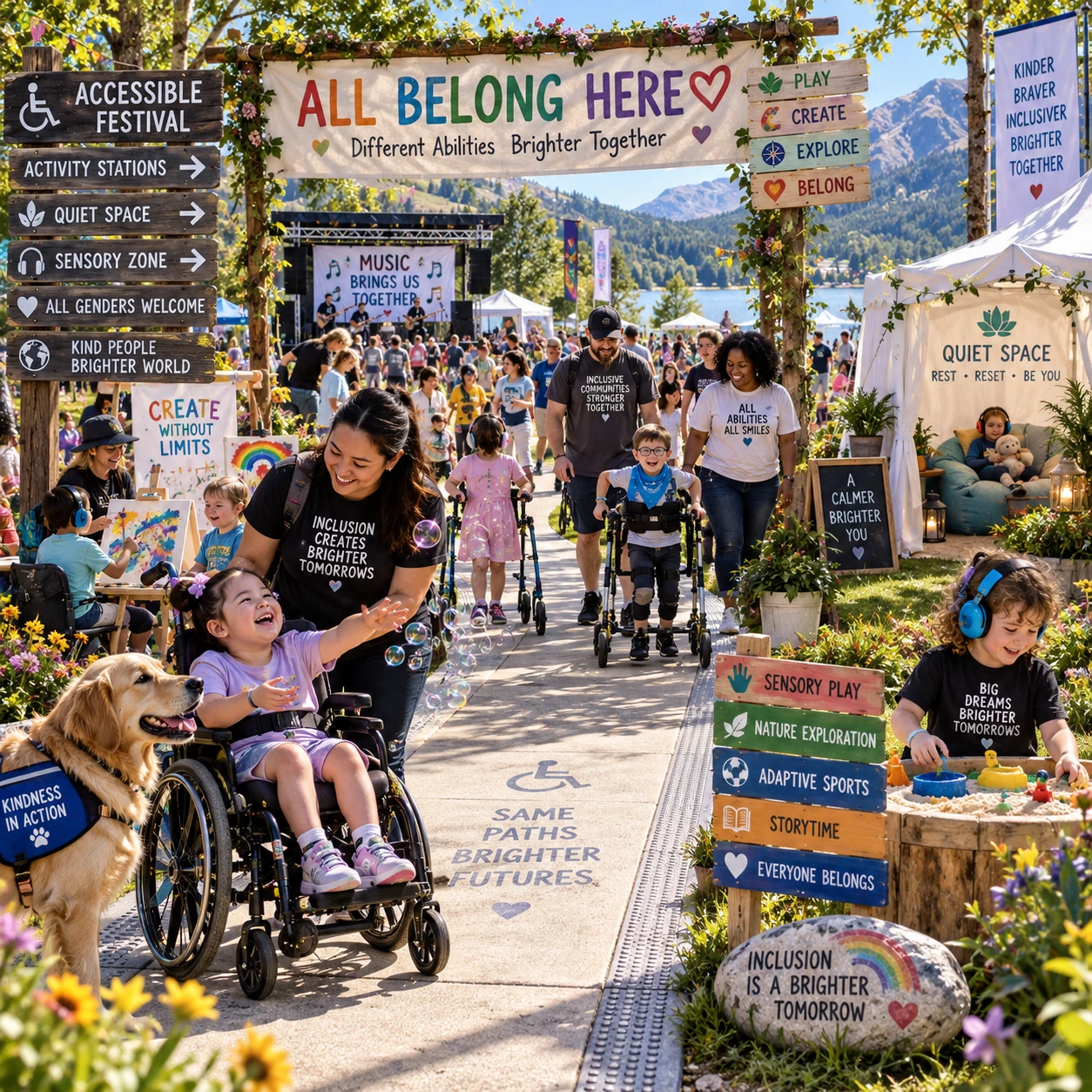
A children’s festival feels welcoming when every child can take part in a way that works for them. That means planning for different mobility, sensory, communication, and support needs from the start, then sharing honest details so families can decide what suits their child.
There is no single accommodation that makes an event inclusive. A smooth route may help a wheelchair user, while another family needs a low-noise break area, step-by-step activity instructions, or a place to sit beside a child. Thoughtful inclusive event planning makes room for those differences without asking children to fit one narrow idea of participation.
What an Inclusive Children’s Event Looks Like
An inclusive children’s event gives children with different abilities meaningful ways to participate, feel welcome, and spend time with others. It combines accessible surroundings with flexible activities and respectful support from staff.
In practice, disability inclusion is visible in small choices across the whole festival. Children can reach activity areas, understand what is happening, choose how to join in, and take breaks without being made to feel they have failed. One child might complete a craft independently; another may watch first, use adapted materials, or take part with a caregiver.
Inclusion does not require every child to do every activity in the same way. It asks organizers to offer genuine options and avoid treating a diagnosis as a complete description of a child’s preferences. Ask what helps, make reasonable adjustments, and let children set their own pace.
- Participation: Activities have more than one way to join in.
- Access: Routes, facilities, information, and ticketing account for different needs.
- Belonging: Staff speak directly and respectfully to children, not only to caregivers.
Identify Barriers Before Event Day
To identify barriers, follow a family’s journey from finding event information to leaving the festival. Look for obstacles in the physical environment, sensory conditions, communication, and logistics before they become stressful on the day.
Start with the information families need to decide whether and how to attend. Is the entrance step-free? How far is the accessible parking or drop-off point from the gate? Are there accessible toilets, places to sit, and a clear route between activity areas? A venue can technically be accessible yet still involve a long, uneven walk that is difficult for a child using mobility equipment or a family carrying supplies.
Consider sensory and communication barriers, too. Crowds, amplified music, sudden announcements, flashing effects, and queues can make an event difficult to navigate. A child may need extra processing time, a visual schedule, or a quieter way to ask for help. Practical details such as bag checks, entry times, food options, and re-entry rules matter to caregivers planning around a child’s needs.
Walk the site as if you were attending with a stroller, wheelchair, or a child who needs frequent breaks. Note bottlenecks, confusing signs, exposed cables, and places with no seating. Fix what you can; clearly disclose what you cannot change.
Make the Venue and Activities Accessible
Make a venue more accessible with continuous, clear routes, usable facilities, and activities that allow different ways to participate. Check the full journey, not only the entrance or one designated activity.
Keep paths wide enough for mobility devices and strollers, with firm surfaces where possible. Place signs at readable heights and use simple directional language. Check that gates, ramps, thresholds, and toilet access work in practice. If a route is steep or a surface is uneven, describe it accurately and provide an alternative route when available.
For activities, plan flexible participation into the setup rather than waiting for a child to ask for an exception. At a painting table, offer large-handled brushes, paper secured with tape, and a standing or seated workspace. At a music station, children might play instruments, choose sounds, conduct, or listen from a quieter spot. These are adaptive activities: the goal stays engaging while the method can change.
- Offer chairs and accessible-height work surfaces at activity stations.
- Use materials that are easy to grip, see, and handle, with staff available to assist.
- Allow children to join briefly, observe first, pause, or leave and return.
- Keep high-demand activities from blocking through-routes or access to essential facilities.
More equipment and choices take planning, space, and staff time. Prioritize adjustments that remove common barriers across several activities, then be clear about what is and is not available.
Plan for Sensory and Communication Needs
Plan for sensory and communication needs by offering predictable information, clear cues, and a low-stimulation place to pause. These options help families make informed choices and give children more control over their experience.
A sensory-friendly space is a calmer area where children can take a break from the noise, lights, or activity of the main festival. It might include comfortable seating, lower lighting, simple activities, and fewer people. Keep it away from loud speakers and busy entrances if possible, and explain whether children need supervision or can come and go freely. A quiet area is not a treatment space; it is a practical place to regroup.
Share a short visual schedule showing when and where key activities happen. Use signs with familiar words and clear symbols, and announce changes in more than one way when possible. Staff can speak in short, direct sentences, offer extra time for a response, and point to choices rather than relying on shouted instructions over music.
Families may benefit from knowing which parts of the program are likely to be loud, crowded, or unpredictable. If the event offers a quieter entry period, noise-reducing headphones, or a low-sensory performance, describe the arrangements and any limits. Don’t promise a silent environment at a busy festival; tell people what organizers can realistically control.
Involve Children and Families in Planning
Involve children and families by asking what would make the festival easier to attend and acting on what you hear. Offer a private, practical way to share access needs without requiring families to disclose a diagnosis.
Before the event, invite questions through an email address, phone number, or accessible online form. Ask about useful adjustments, not medical histories: “Would a step-free route, a quieter check-in, or a place to rest help your family?” Make clear which requests can be arranged in advance and which facilities are already available.
Where appropriate, include children in the conversation. They may know whether they prefer written instructions, a preview of the site, a quieter activity, or the freedom to watch before joining. A caregiver can offer helpful context, but the child’s own preferences should guide decisions whenever possible.
After the festival, ask what worked and what remained difficult. Keep feedback specific: Which route caused trouble? Was the quiet area easy to find? Did the activity instructions make sense? Use the answers to adjust the next event, and tell families when their suggestions lead to a change. Feedback is useful only when organizers close the loop.
Prepare Staff and Communicate Access Details
Prepare staff to give practical, respectful assistance, then publish accurate access details before tickets are booked. Clear communication helps caregivers plan with confidence and prevents avoidable surprises at the gate.
Brief staff and volunteers on accessible routes, toilet locations, the quiet area, and how to request help. Encourage them to ask before assisting with a mobility device or personal care item. They should address children respectfully, avoid assumptions about what a child can do, and know whom to contact when they cannot answer a question.
Put access information in one easy-to-find place on the event website and include it in confirmation emails. Useful details include:
- Step-free entrances, route surfaces, distances, and accessible parking or drop-off arrangements.
- Accessible toilet locations, seating, rest areas, and any changing facilities.
- Expected noise or crowd levels, quieter options, and the location of the sensory-friendly space.
- How to request communication support, activity adjustments, or assistance on arrival.
- Ticketing policies for caregivers, service animals, re-entry, and early or quiet access, if offered.
Be specific rather than relying on a broad label such as “fully accessible.” If a route has a short gravel section or an activity has limited seating, say so. Honest information gives each family the details to judge what will work for their child.
Frequently Asked Questions
These answers cover common ways to improve accessibility at a children’s festival, support sensory needs, adapt activities, and help families plan ahead.
How can a children’s festival be more accessible?
Review the full attendee journey, from event information and arrival to activities, toilets, breaks, and departure. Provide clear routes, accessible facilities, flexible activities, useful communication options, and a quiet area where space allows. Publish accurate details and train staff to help respectfully.
What is a sensory-friendly space?
A sensory-friendly space is a calmer area where a child can take a break from the festival’s noise, lights, or crowds. It may offer seating, lower stimulation, and simple activities. Tell families where it is, what it offers, and whether an adult must stay with the child.
How can activities include children with different abilities?
Offer more than one way to take part. Children might use adapted tools, work seated or standing, follow visual instructions, join with a caregiver, observe first, or return after a break. Keep the activity’s purpose while allowing children to choose a comfortable level of involvement.
What access information should event organizers share in advance?
Share entrance and route details, parking or drop-off options, accessible toilets, seating and rest areas, expected sensory conditions, quiet-space arrangements, and ways to request support. Include relevant ticketing and re-entry policies, and be candid about any barriers that remain.